
Federal agencies possess more technology than ever before. Yet across defense, logistics, health, and nearly every mission domain, operational complexity continues to grow. Decisions still slow at the seams between systems, data exists but isn’t cleaned and leveraged, teams bridge gaps manually that technology was supposed to close, and new applications don’t reach mission users when they need it.
Over the last decade, agencies have spent years modernizing systems, adopting new technologies, and accelerating digital transformation efforts. Those investments were necessary and increasingly urgent.
But modernization alone has not solved the operational challenge.
Many efforts improve individual capabilities without fundamentally improving how organizations operate, leading to disconnected systems, siloed data, fragmented workflows, and technologies that struggle to perform in mission environments. The next phase must close that gap.
That is the operational convergence imperative: ensuring technology doesn't just modernize individual systems, but enables missions to operate under real-world conditions.
The cost of fragmentation
Operational friction is often the result of technologies that were modernized independently but not designed to operate together. As agencies adopted new platforms, migrated to the cloud, and expanded digital capabilities, many inadvertently created a new kind of fragmentation. New platforms were layered onto legacy processes. Data environments expanded without interoperability. Mission users were forced to navigate growing numbers of disconnected tools, interfaces, and workflows.
Defense Missions
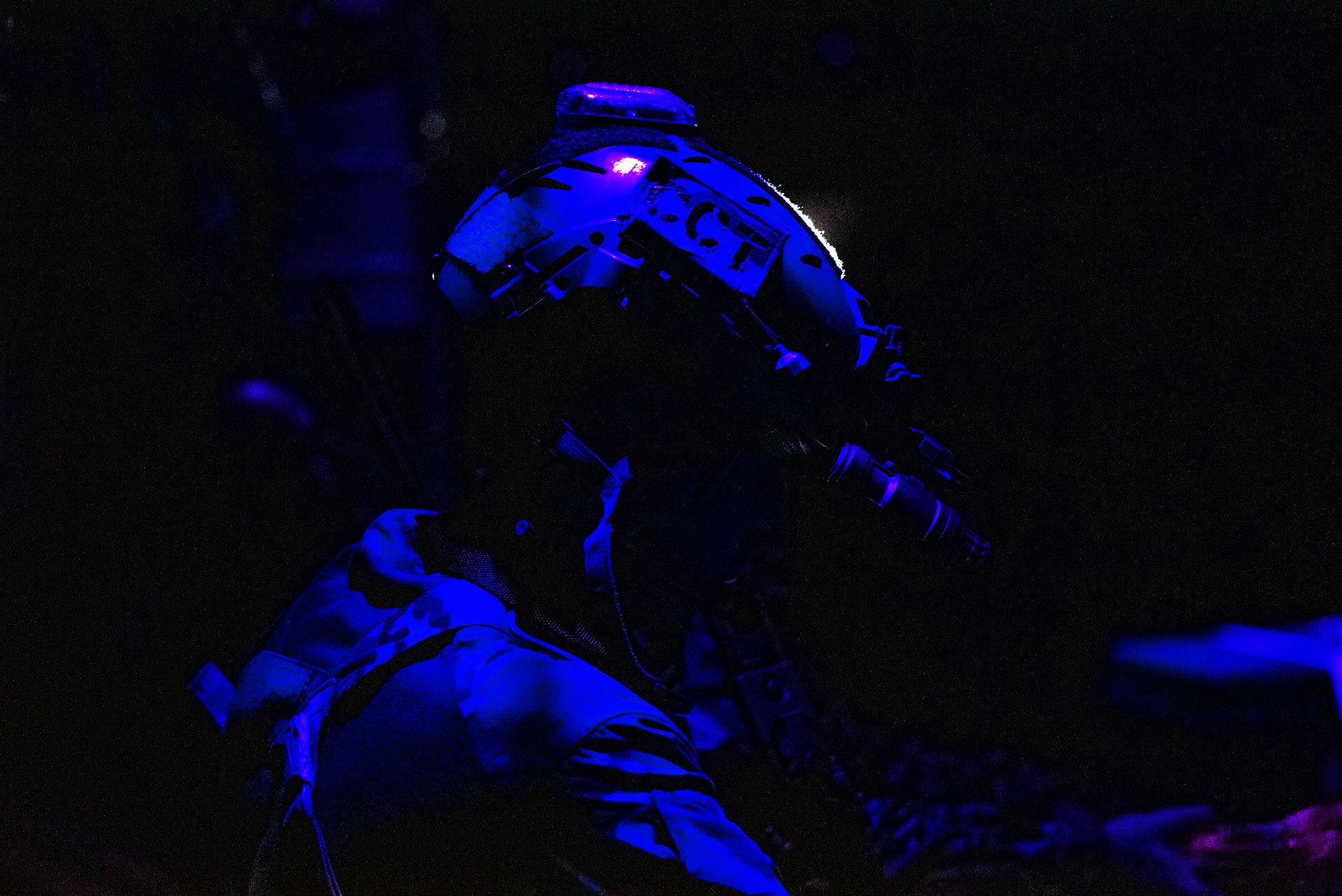
Army protection cells operate in environments where seconds matter. Intelligence, operational updates, force protection information, and mission data all influence decisions, yet those inputs often arrive through disconnected systems.
In developing SHEPRD™ as part of the Army's Next Generation Command and Control initiative, LMI saw firsthand the challenge was not collecting more information. It was creating a decision support tool that allowed protection teams to understand threats and coordinate responses faster. Working side-by-side with Soldiers allowed the team to continuously refine the platform around operational realities, resulting in a shared picture that improved situational awareness and accelerated decision-making.
Logistics and Sustainment Missions
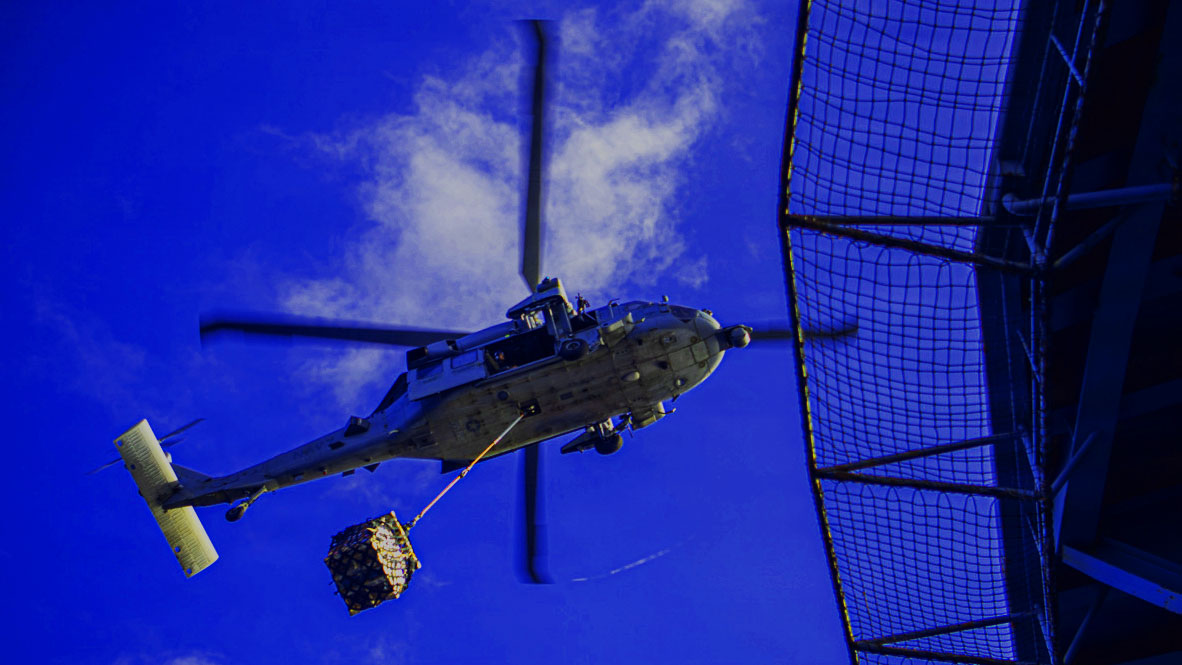
When information is delayed or distributed across separate systems, logistics teams spend valuable time reconciling data instead of making decisions. The challenge is turning dispersed information into a shared operational picture that enables coordinated action.
During USTRANSCOM's Turbo Fusion exercise, logistics planners needed to coordinate transportation, sustainment, and asset visibility across distributed operations. By instrumenting more than 400 cargo assets with SPECTR™ mesh tags, LMI helped teams gain secure, near real-time visibility across the supply chain, enabling multiple stakeholders to evaluate the same operational picture and make faster, more coordinated logistics decisions.

Mission Planning
During mission planning for U.S. Special Operations Command, planners traditionally spent hours gathering information from multiple systems before developing a course of action. LIGER® demonstrated that AI was not the differentiator. The differentiator was connecting data, planning workflows, and decision support into a unified operational experience that accelerated planning.
By rapidly identifying relevant information from previous mission reports and generating mission plans, situational reports, and after-action reports, LIGER reduced the time spent gathering and synthesizing information, allowing planners to focus on refining decisions rather than assembling data.
These examples span defense, logistics, and mission planning, yet they reveal the same pattern. The breakthrough was not a single technology or platform. It was the ability to connect data, systems, users, and workflows into a cohesive operational experience. That is where modernization begins to translate into mission advantage.
The next phase of modernization
Operational convergence addresses this challenge by shifting the focus from deploying individual technologies to designing mission ecosystems. Instead of optimizing isolated capabilities, it brings together the elements that determine mission success—data, software, hardware, AI, security, workflows, and operators—so they reinforce one another under real-world conditions.
AI without trusted data cannot produce reliable decisions. Modern platforms that cannot be securely deployed never reach operators. Operational awareness without integrated workflows still depends on manual coordination. Even the most advanced capabilities lose value when they operate in isolation.
Mission advantage is created when these capabilities are stacked together, designed from the beginning to operate as a cohesive system rather than a collection of independent tools.
Characteristics of successful organizations
Build systems and allocate resources according to how decisions are made, how teams coordinate, and how missions unfold on the ground. Rather than automating existing organizational structures, organizations design around the operational workflows users actually follow. During development of SHEPRD, LMI worked side-by-side with Army protection cells, continuously incorporating Soldier feedback to ensure the platform reflected operational realities.
Too often, organizations build capabilities first and address security, compliance, accreditation, and deployment requirements later. Successful organizations treat security as a priority from day one. LMI developed IronSled™ after repeatedly seeing innovative software delayed by accreditation rather than technology maturity. Innovation only creates value when it can be securely deployed.
Simplify technology ecosystems wherever possible and ensure new capabilities reduce complexity for users instead of increasing it. For years, Army soldiers were required to switch between interfaces and login systems to complete training tasks. LMI partnered with the Army to consolidate those experiences into a unified platform, reducing cognitive burden and allowing users to focus on the mission instead of navigating technology.
New capabilities create the greatest impact when they are designed to work together from the outset. Successful organizations establish shared data, integration, and workflow foundations before expanding technology investments. Before the Army could operationalize AI and advanced analytics across the enterprise, LMI helped them connect more than 177 authoritative data sources and establish a common data foundation capable of supporting mission-critical decisions.
Evaluate modernization efforts based on how effectively they improve coordination, accelerate decisions, reduce operational burden, and support mission outcomes under real-world conditions. During USTRANSCOM's Turbo Fusion exercise, success wasn't measured by the deployment of new technology, it was measured by whether planners could achieve greater logistics decision advantage through improved operational awareness and coordination.

From modernization to mission advantage
Federal agencies do not need to restart modernization efforts. The foundation is already in place.
As LMI explored in Modernization or Mission Failure, agencies have spent the last decade replacing aging infrastructure and building modern digital foundations. In From Edge to Enterprise, we examined how those investments expanded into cloud, edge, enterprise, and operational environments.
Operational convergence represents the next evolution: ensuring those investments work together under real-world mission conditions.
Mission advantage is rarely created by a single technology investment. It is created by combining interoperable systems, secure architectures, operational workflows, and mission users into ecosystems where each capability reinforces the others. Organizations that embrace this approach will move more quickly from innovation to impact.
Because ultimately, modernization is not measured by how much technology an organization deploys.
It is measured by how effectively missions execute because of it.