Case Study
LMI Supports Logistics Decision Advantage for USTRANSCOM’s Turbo Fusion Exercise
Case Study
RAPTR® Enables Next- Gen Global Communications Force Design
Perspective
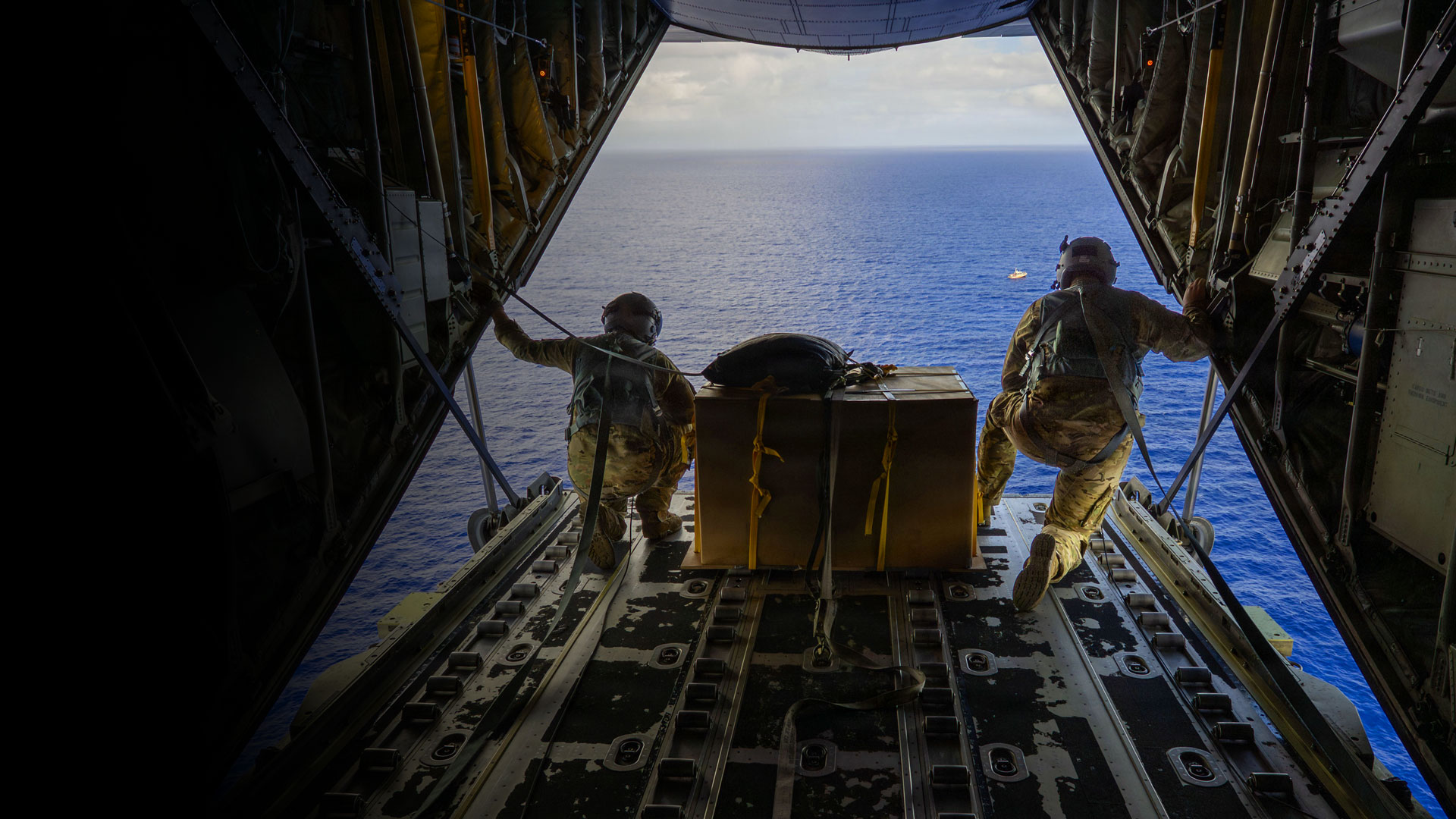
Dispersion as Advantage: Designing Logistics for a Contested Environment
Perspective
For the Warfighter: Equipping Readiness at the Speed Missions Demand
Perspective
Resilient Supply Chains as a Strategic Advantage
Perspective
Designing Intelligent, Resilient Mission Systems
Press Release
LMI Expands Full-Stack Asset Visibility Capabilities with Acquisition of Advanced IP
Press Release
LMI Achieves DoW’s CMMC 2.0 Level 2 Certification
Deep Dives
Modernization or Mission Failure: Why “Good Enough” Government Tech is Over
No items found.

Operate at the speed of change

LMI designs and deploys secure logistics capabilities for the environment that exists today. By connecting data, systems, and operations, we strengthen resilience and improve readiness across contested and multi-domain environments.
From enterprise supply chains to the operational edge, we create a shared understanding of the mission to anticipate disruption, adapt, and sustain execution as conditions change — from ground to orbit.

Strengthen resilience.

dentify and predict supply chain vulnerabilities, manage risk proactively, and maintain readiness before disruption affects execution.

Prepare with clarity.

Improve planning accuracy and align supply decisions with evolving demands.  

Operate across domains.

Unify logistics, assets, and data under a common architecture across distributed networks at scale.

Compress decision cycles.

Convert logistics data into insight to adapt faster as conditions change.
Configurable capabilities, tailored for evolving missions

Predictive logistics

Forecast demand, model constraints, and improve supply alignment.

Asset visibility

Track assets in real time and improve operational awareness.

Supply chain assurance

Identify vulnerabilities, assess risk, and strengthen supply continuity.

Decision support

Fuse operational data across systems to sharpen mission planning.

Sustainment modeling and simulation

Test courses of action and model sustainment under changing conditions.

Inventory optimization

Enable informed decisions for items with variable and uncertain demand.

Platforms

RAPTR®

Improve strategic decision-making with rapid modeling, simulation, analysis, and prototyping.

Customize functionality 5–10x faster than traditional tools.
Gain real-time awareness through data visualizations.
Learn more

Accelerate software development and deployment in government authorized environments, in the cloud and on-prem.


Designed to meet federal security requirements so you can deploy faster.
Streamlines the accreditation process by provisioning infrastructure directly within authorized government networks.
Learn more

Turn intent into action with mission-ready AI – connecting data, systems, and workflows to solve complex federal problems at speed.

Breaks down mission objectives into coordinated action.
Provides auditable approval gates for sensitive decisions
Learn more

Deliver the clarity and control missions demand through persistent, enterprise-wide asset visibility.

Enable real-time visibility for forward-deployed forces to ensure operational agility.
Drive confidence in logistics decisions through automated data capture and analytics.
Learn more

Empower protection cells to anticipate threats and synchronize defense in contested environments.

Enhance situational awareness with a unified, real-time view of assets, terrain, routes, and threats.
Prioritize risk and allocate protection efforts with automated analysis and optimized tasking.
Learn more

Customer Success_

From challenge to breakthrough: See how our customers achieved their goals
Case Study

LMI Supports Logistics Decision Advantage for USTRANSCOM’s Turbo Fusion Exercise

Read case study
Read case study
Case Study

AI‑Enabled Forecasting Transforms Munitions Stockpiling and Saves Millions of Dollars

Read case study
Read blog
Case Study

Mission-ready AI: How LIGER® Transforms Planning for U.S. Special Operations Command

Read case study
Read blog
Case Study

RAPTR Enables Next-Gen Global Communications Force Design

Read case study
Read blog

Perspectives_

Perspective

Dispersion as Advantage: Designing Logistics for a Contested Environment

Centralized systems offer speed and convenience, but during a conflict, they’re a target; decentralizing logistics can blunt adversaries while providing advantage for the U.S.
Read blog
Perspective

Resilient Supply Chains as a Strategic Advantage

In today’s competitive defense environment, supply chain performance is as decisive as firepower. Resilient, adaptive supply chains deny adversaries leverage by ensuring the continuous ability to generate and sustain combat power. Every weapon system—aircraft, ground vehicles, and naval platforms alike—relies on a robust industrial base that spans manufacturers, distributors, retailers, and repair nodes to maintain the steady flow of parts, materials, and logistics.
Read blog
Perspective

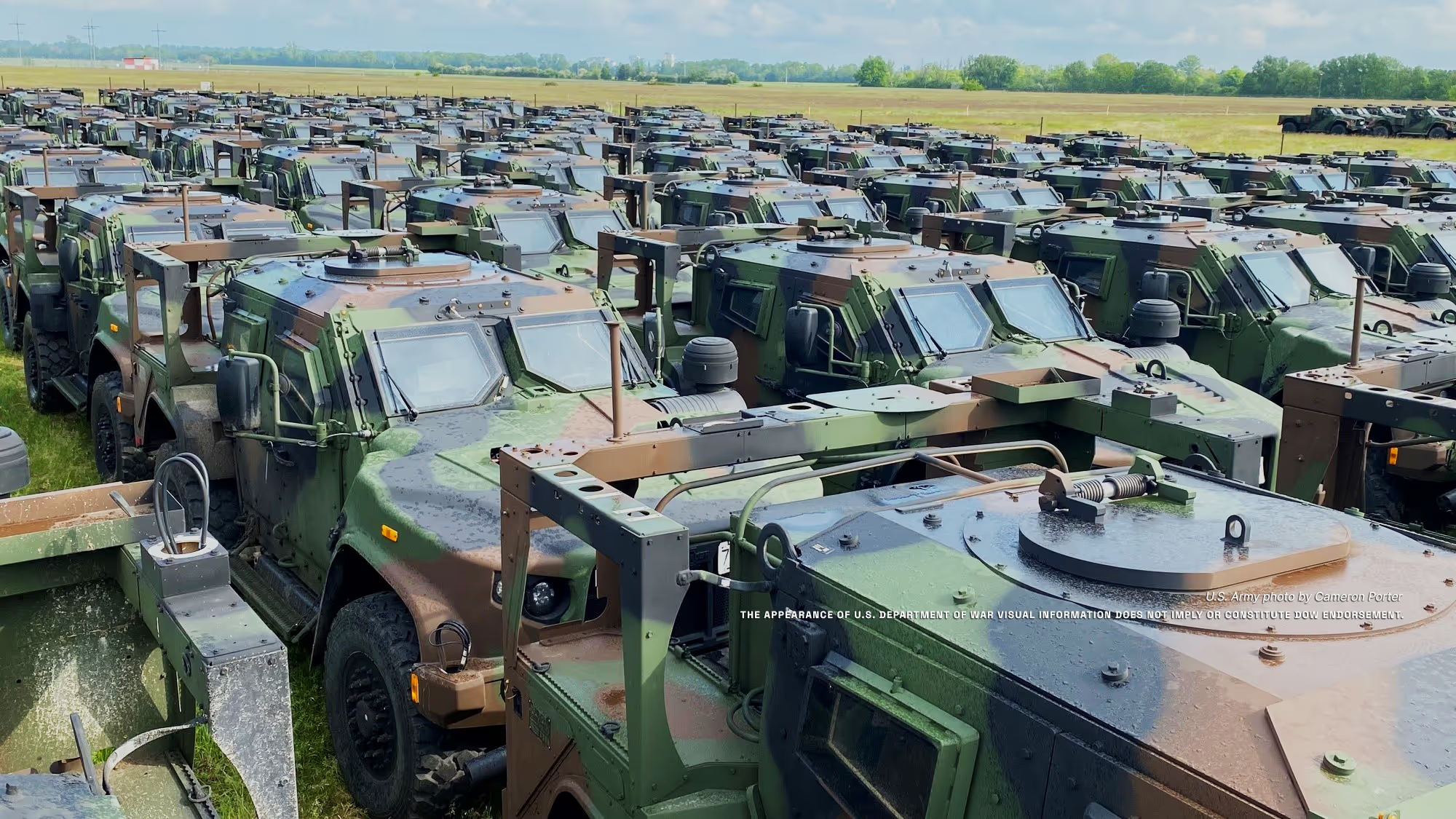
For the Warfighter: Equipping Readiness at the Speed Missions Demand

Rows of vehicles and crates stretch as far as the eye can see—every Humvee, spare part, and weapons case a building block in the Army’s ability to fight. It looks like a warehouse, but it’s more than that; it’s the backbone of combat readiness. Each item represents time, money, and mission-critical capability—but only if the Army knows exactly where it is, its condition, and who is accountable for it.
Read blog
Perspective

Public-Private Partnerships: Building the Future of Space Commerce through Logistics

Government agencies such as NASA and the U.S. Space Force pursue bold scientific and defense missions in orbit. At the same time, commercial ventures like SpaceX and Blue Origin demonstrate that space is no longer the sole domain of government—it is rapidly becoming a viable arena for commerce. To unlock the full promise of this new space economy, we must recognize that logistics is the foundation—and that sustainable progress depends on innovative partnerships between the public and private sectors.
Read blog
Perspective

When Golden Dome Hits the Ground: Building a Shield from Earth to Orbit

Space is central to the Golden Dome strategy, but the fight does not begin or end in orbit. The battlefield stretches across land, sea, air, and cyberspace, where U.S. systems are contested daily by adversaries who innovate quickly, exploit vulnerabilities, and adapt faster than legacy defenses can respond.To stay ahead, Golden Dome must also take root on the ground. Securing the terrestrial domain must be a mission requirement. Protecting the homeland, defending U.S. forces, and deterring tomorrow’s threats demands a multi-domain shield that is resilient, adaptive, and free from the limits of yesterday’s systems.
Read blog
Press Release_

LMI Expands Full-Stack Asset Visibility Capabilities with Acquisition of Advanced IP

Read More