
Perspective_
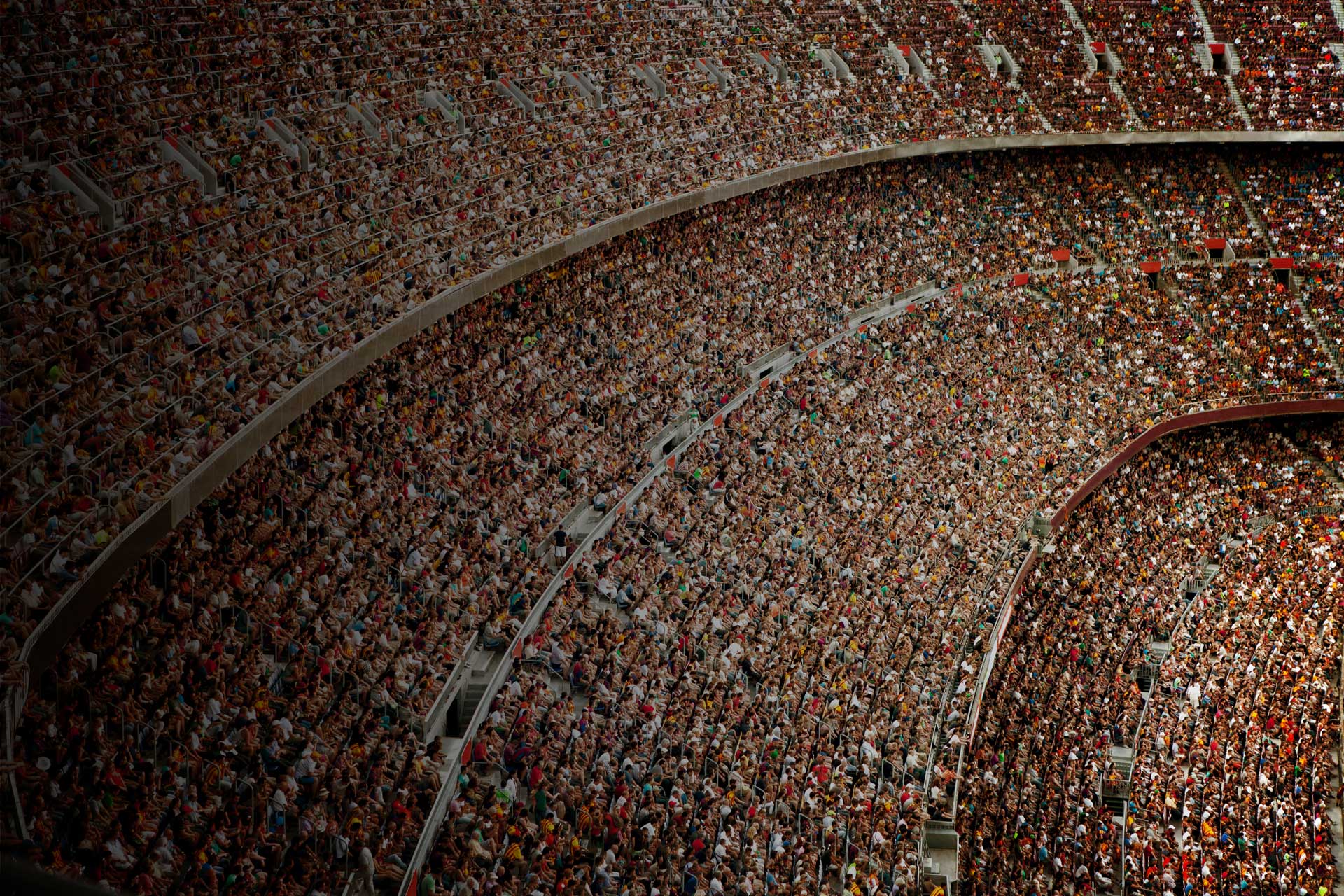
The recent after-action reports from the Department of Homeland Security (DHS) remind us that, for a month this summer, the United States successfully hosted the largest and most complex security operation in the history of American sports: the FIFA World Cup. Eleven cities. Millions of visitors from more than 200 countries. Thousands of federal, state, local, and tribal personnel working side by side under a single operational picture that secured the safety of U.S. citizens and our nation’s guests.
DHS and FBI conducted site visits to all 11 host cities well before a single match was played, coordinating equipment needs, placement, and on-the-ground capability requirements across every level of government to address one of the most obvious threats: drones. Each city had its own operational playbook to address any intrusions. A real-time dashboard gave leadership shared visibility into status as airspace conditions changed. DHS and the FBI took more than 700 unauthorized drones out of the sky over stadiums and fan zones — not through a single silver-bullet system, but through sustained interagency coordination, tested and layered technology, redundant systems, and a plan that had already accounted for the threat before it arrived.
This is what preparation looks like when it works. The World Cup is a high-water mark, but it also can serve as a floor to build from, because threats don't stand still, and neither should we.
Watch the skies
The drone threat that host cities managed this summer isn't static, it's getting more capable, more affordable, and more distributed. We only have to look at the battlefields in Ukraine and other OCONUS environments to see how rapidly these technologies evolve. In those conflicts, commercially available drones are modified and deployed in new configurations on a weekly basis, rewriting tactical playbooks in real time. The window between a technology’s debut and its widespread adaptation is shrinking to zero. The same qualities that make unmanned systems valuable for public safety, disaster response, and situational awareness also make them attractive to threat actors.
The World Cup drone response worked because it drew on years of rigorous, evidence-based testing: standardized methodologies, real field conditions, and honest data on what detection and mitigation systems can and can't do. That testing infrastructure gave operators the evidence they needed to make fast, confident calls about what to deploy and where. As the counter-drone mission scales beyond single events to steady-state protection of critical infrastructure, that same discipline — rigorous evaluation before rapid deployment — should scale as the technology does.
But that scaling must match the pace at which the threat can proliferate. That means domestic airspace security must expand its operational mindset. Sniffing radio signals won’t always be enough: we need to master physical, multi-modal tracking—pairing clutter-resilient radar with thermal and optical computer vision to spot dark, unregistered drones. In urban skies, mitigation must prioritize low-collateral effectors, utilizing autonomous net-capturing interceptor airframes and precision electronic takeovers that neutralize threats without dropping debris onto crowds below. Underpinning it all, we must replace rigid procurement cycles with agile, open architectures capable of updating threat algorithms at the speed of innovation, both ours and our adversaries’.
Drones aren’t just targets
The same platforms host cities used to watch the skies for threats can also watch the ground for a different kind of threat entirely. USDA and CBP are flying thermal-equipped drones over Texas ranches and border terrain to spot New World screwworm before it spreads through livestock and wildlife. It's a different mission, but the same underlying insight: aerial platforms, sensors, and AI can extend a small team's perspective across terrain no ground crew could cover in time. The same dual-use logic can apply to public safety. Trusted or approved drones could become another node in the response system, dispatched to observe a scene before responders arrive, monitor crowds, or help locate an unauthorized aircraft. The goal is not another gadget. It is to extend the response system's reach and give operators better information sooner.
DHS has already signaled where this is headed. The Department has explored AI-powered biosurveillance capabilities, tools that could fuse signals from transportation, the border, supply chains, and agriculture into a single early-warning picture. By focusing on AI systems built to support national security and economic competitiveness, we can make these advanced capabilities standing parts of the homeland security toolkit, available for the LA28 Olympics, and everything that comes after, rather than stood up from scratch for each event.
Information has to be actionable
None of this works without the operating principle that made the World Cup succeed in the first place: partners sharing data, in real time, in a form that leaders and frontline operators can actually use. It's not enough to collect more sensor feeds or stand up more dashboards; where agencies are already connecting formerly closed systems, integration can be slow and dependent on workarounds. The volume of information available to homeland security operators today already outpaces any team's ability to act on it manually. The next generation of detection technology needs to be paired with a common operating picture — one that fuses threat data, asset status, terrain, and other context into a shared view, and uses automation to turn "we detected something" into "here's what we're doing about it." This means biosensors should not live in their own silo. The same architecture that integrates drone detection should be able to bring together biological, acoustic, video, and other sensor feeds into one operational picture. For LA28, that could mean bringing together a drone alert with acoustic gunshot triangulation, crowd conditions, and biosensor signals, with software helping operators understand what the combined signals mean, with interfaces that frontline operators can act on.
To do this, we also need to solve the policy and legal barriers to sharing data as deliberately as the technical ones. Aviation offers a useful model: the air-safety system works because standards, data, and alerts move across organizations. The opportunity now is to build that kind of connective layer for low-altitude airspace and apply the same principle more broadly across homeland security.
Celebrating success — then building on it
The FIFA World Cup wasn't secured by any single technology or agency. It was secured by preparation, coordination, and a willingness to bring emerging capabilities — drones, AI, shared data — into an operational plan built well before opening kickoff. That same formula, applied continuously rather than event by event, can help homeland security stay ahead of threats that do not follow a tournament schedule.
The bar has been set. The task now is to make sure it becomes the new normal, not the exception.